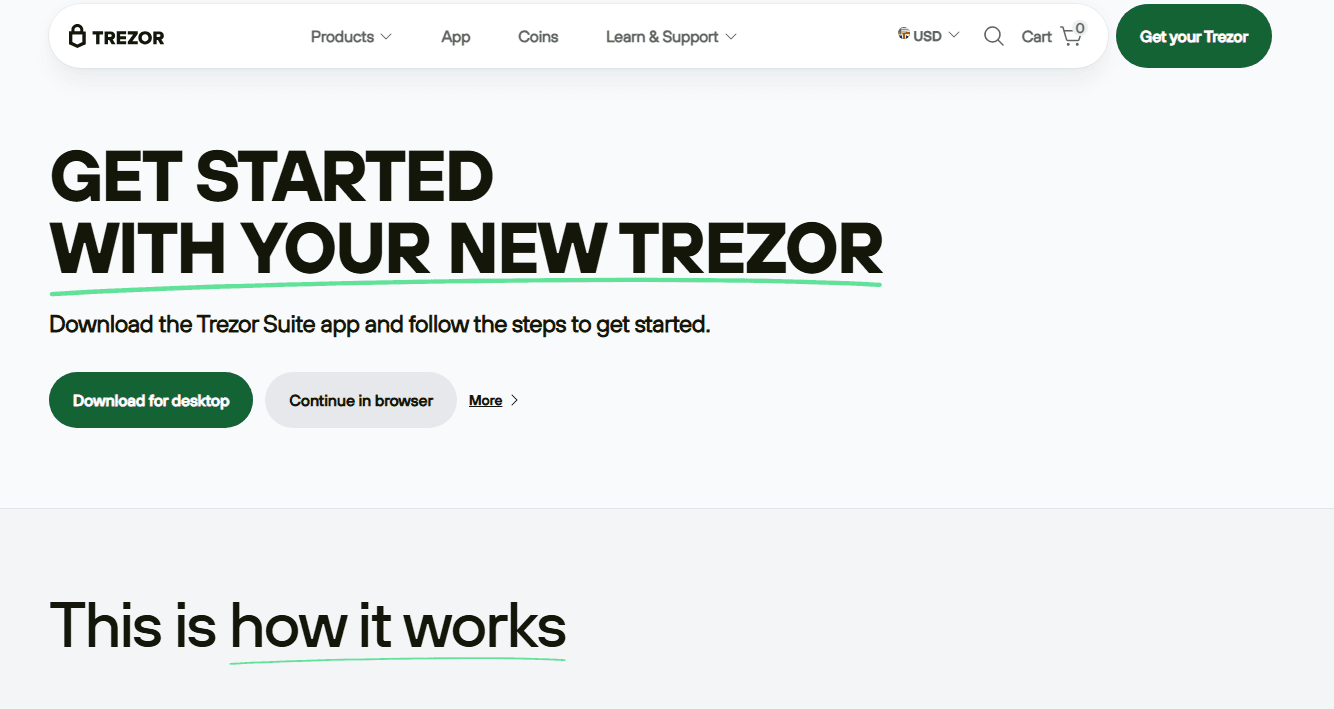
Trezor.io/start – Your Official Gateway to Secure Cryptocurrency Storage
As cryptocurrency adoption continues to grow worldwide, so do the risks associated with storing digital assets online. Hacks, scams, and exchange failures have made one thing clear: true ownership of crypto begins with proper self-custody. This is where Trezor hardware wallets play a crucial role, and Trezor.io/start is the official entry point to setting them up correctly and securely.
This comprehensive guide explains what Trezor.io/start is, how it works, and why it is essential for anyone serious about protecting their cryptocurrency investments.
Understanding Trezor.io/start
Trezor.io/start is the official setup and onboarding page created by SatoshiLabs, the original inventors of the hardware wallet. It is designed to guide users through the secure initialization of a Trezor device, ensuring that every step—from firmware installation to wallet backup—is done safely and correctly.
Rather than relying on third-party apps or unofficial instructions, Trezor.io/start guarantees that:
You install authentic firmware
You generate private keys offline
You avoid phishing websites and malicious software
In short, it is the safest and recommended way to begin using any Trezor hardware wallet.
Why Trezor.io/start Is So Important
Hardware wallets are only as secure as the setup process. If initialized incorrectly, even the best device can become vulnerable.
Key Reasons to Use Trezor.io/start
Official Source Only
The page is owned and maintained by Trezor, reducing the risk of tampered software.Phishing Protection
Many scams imitate wallet setup pages. Trezor.io/start ensures you are on the legitimate site.Correct Firmware Installation
New devices ship without firmware so users can verify authenticity during setup.Step-by-Step Guidance
Clear instructions help beginners avoid costly mistakes.
Trezor Hardware Wallets Supported
Trezor.io/start supports all current Trezor devices and automatically adjusts instructions based on the model detected.
Trezor Model One
Simple and affordable
Button-based confirmation
Ideal for first-time users
Supports hundreds of cryptocurrencies
Trezor Model T
Premium touchscreen interface
Advanced backup options
MicroSD card support
Designed for advanced users and institutions
Trezor Safe Series
Enhanced chip security
Modern design and faster performance
Built for long-term asset protection
Each device benefits from the same secure onboarding process via Trezor.io/start.
Preparing for Setup
Before visiting Trezor.io/start, take a few important precautions:
Use a private, malware-free computer
Avoid public Wi-Fi networks
Have pen and paper ready for your recovery seed
Set aside uninterrupted time for setup
These steps reduce the chance of errors or security compromises.
Step-by-Step Setup Using Trezor.io/start
Step 1: Access the Official Page
Manually enter the URL in your browser:
Double-check spelling and ensure the site uses HTTPS encryption.
Step 2: Connect Your Trezor Device
Plug your device into your computer using the original USB cable
Follow on-screen instructions
Confirm any prompts directly on the hardware wallet
Never connect your device to unknown or untrusted systems.
Step 3: Download and Install Trezor Suite
Trezor.io/start will guide you to install Trezor Suite, the official application for managing your wallet.
Trezor Suite Features:
Portfolio overview
Secure sending and receiving
Built-in exchange integrations
Privacy tools such as Tor support
Firmware and device management
Available on Windows, macOS, Linux, and as a web version.
Step 4: Firmware Installation
For security reasons, Trezor devices do not come pre-installed with firmware.
Trezor Suite detects missing firmware
You confirm installation on the device screen
Firmware authenticity is verified automatically
This process ensures your device has never been compromised.
Step 5: Wallet Creation or Recovery
At this stage, you choose one of two options:
Create a new wallet
Recover an existing wallet
New users should select Create new wallet. Existing users can restore funds using their recovery seed.
Step 6: Generate and Secure Your Recovery Seed
Your recovery seed is the foundation of your wallet’s security.
Generated offline on the Trezor device
Consists of 12, 18, or 24 words
Shown only once during setup
Best Practices:
Write words clearly in correct order
Store in a secure, offline location
Consider fireproof or metal backups
⚠️ Never store your seed digitally or share it with anyone.
Step 7: Seed Verification
To ensure accuracy, Trezor will ask you to re-enter selected words from your recovery seed. This step prevents permanent loss caused by writing mistakes.
Step 8: Set a Secure PIN
The PIN protects your device against unauthorized physical access.
Choose a unique, hard-to-guess PIN
Use more than 4 digits for added security
Enter PIN using the scrambled layout shown on your device
Incorrect PIN attempts result in increasing delays, deterring brute-force attacks.
Advanced Security Options
Passphrase Feature
A passphrase adds an extra layer of security by creating hidden wallets.
Benefits:
Protects against seed exposure
Allows multiple wallets under one seed
Important: Forgetting your passphrase means losing access permanently.
Shamir Backup (Model T Only)
Splits your recovery seed into multiple shares
Requires a minimum number of shares for recovery
Ideal for long-term and institutional storage
This method significantly reduces single-point-of-failure risks.
Cryptocurrencies Supported by Trezor
Trezor supports thousands of assets, including:
Popular Cryptocurrencies
Bitcoin (BTC)
Ethereum (ETH)
Litecoin (LTC)
Dogecoin (DOGE)
Tokens and Stablecoins
ERC-20 tokens
USDT, USDC, DAI
Polygon and Binance Smart Chain tokens
Additional Assets
Cardano (ADA)
Avalanche (AVAX)
Polkadot (DOT)
Solana (via integrations)
Support continues to expand through firmware updates and third-party wallets.
Using Third-Party Wallets with Trezor
While Trezor Suite is recommended, many users connect Trezor to external wallets for advanced use cases:
MetaMask – DeFi and NFTs
Electrum – Bitcoin power users
Exodus – User-friendly interface
MyEtherWallet – Ethereum management
In all cases, private keys remain securely stored on the Trezor device.
Common Errors to Avoid
Entering recovery seed on a website
Downloading fake Trezor apps
Skipping firmware updates
Using weak PINs
Losing or damaging seed backups
Avoiding these mistakes dramatically increases long-term security.
What If Your Trezor Is Lost or Broken?
Your crypto is not stored on the device itself—it lives on the blockchain.
To recover:
Purchase a new Trezor
Visit Trezor.io/start
Select Recover wallet
Enter your recovery seed securely
Your balances will be restored instantly.
Hardware Wallet vs Software Wallet
FeatureTrezor Hardware WalletSoftware WalletKey StorageOfflineOnlineHack ResistanceVery HighModerateLong-Term SecurityExcellentRiskyUser ControlFullLimited
Trezor provides true ownership and independence from centralized platforms.
Is Trezor.io/start Legit and Safe?
Yes — when accessed correctly.
Safety Tips:
Bookmark the official site
Verify SSL (HTTPS)
Never enter your seed online
Confirm actions on the device screen
Trezor’s open-source approach allows public audits, increasing transparency and trust.
Final Conclusion
Trezor.io/start is more than just a setup page—it is the foundation of secure cryptocurrency ownership. By guiding users through safe initialization, verified firmware installation, and proper backup procedures, it ensures that private keys remain private.
In an industry where mistakes can be irreversible, Trezor empowers users with full control, transparency, and peace of mind. Whether you are holding crypto for the long term or actively managing assets, starting at Trezor.io/start is the smartest move you can make.